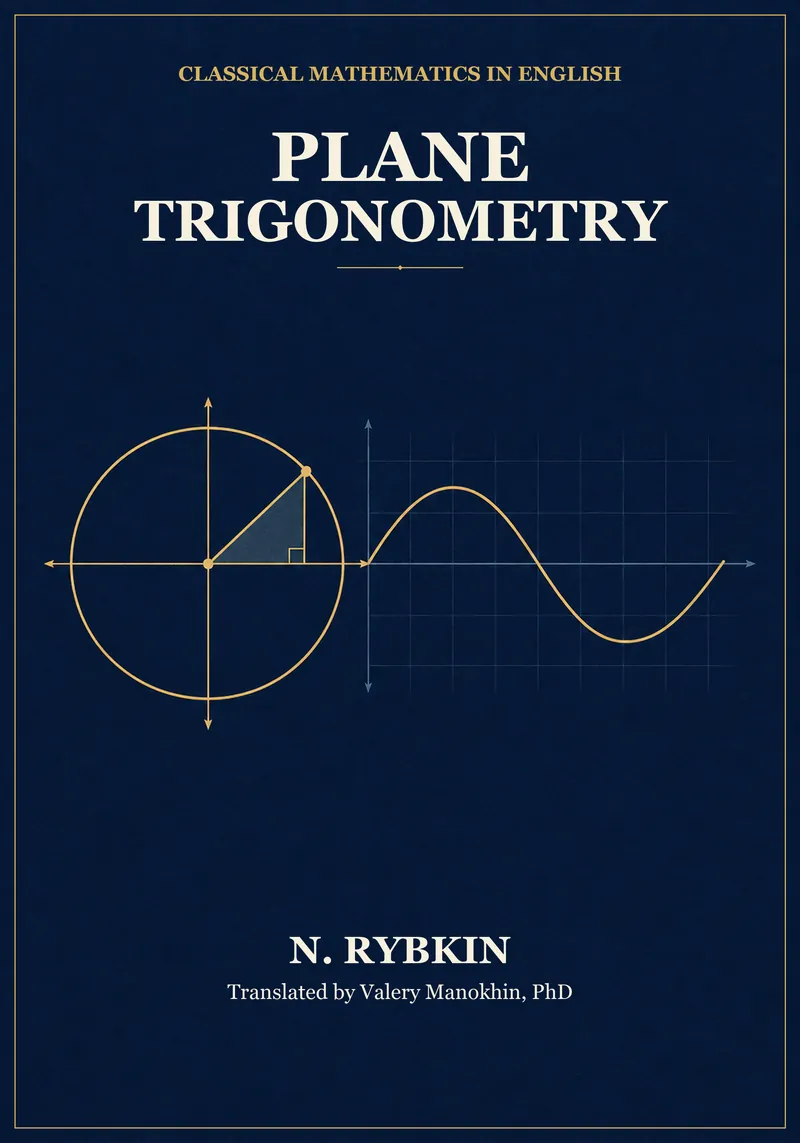
Trigonometria Plana
por N. A. Rybkin
Traduzido por Valery Manokhin, PhD
Um curso completo de trigonometria plana, na primeira tradução fiel para o inglês a partir da edição russa original. Onze capítulos e 126 seções numeradas em três divisões. A goniometria constrói as seis funções trigonométricas a partir de linhas no círculo, primeiro para o ângulo agudo e depois para a volta completa: fórmulas de redução, ângulos negativos e periodicidade, gráficos das funções, funções circulares inversas, fórmulas de soma e diferença, do arco duplo e do arco metade, redução à forma logarítmica e ângulo auxiliar, e um capítulo de equações trigonométricas. A segunda divisão explica como as tábuas trigonométricas são construídas e como se usam as de quatro e cinco casas. A terceira resolve triângulos retângulos e obliquângulos e encerra com a medição em campo: distâncias inacessíveis, alturas e triangulação. Cinquenta e quatro figuras e um resumo das fórmulas básicas.
11 capítulos · 126 artigos numerados · 117 páginas
Onde se encaixa na escola — EUA, Reino Unido e Canadá ↓ Adultos e autodidatas são bem-vindos — a grande matemática não tem limite de idade.
Onde se encaixa na escola
Currículo completo: todos os livros por ano escolar →| Estados Unidos | 10–12 | Trigonometry / Precalculus; closes with measurement in the field and triangulation |
|---|---|---|
| Reino Unido | Years 10–13 | GCSE Higher (sine and cosine rules) → A-level Pure |
| Canadá | Ontario 10–12 | MPM2D → MCR3U → MHF4U · QC Secondary IV–V SN |
Não coberto neste livro
exercícios — este volume é apenas exposição · estatística e tratamento de dados · probabilidade · vetores
Estes blocos precisam vir de outro material. Faltam no livro, não nesta descrição.
Onde este livro se encaixa
Ver a sequência completa →Estudar antes
- Álgebra Elementar$69.95
- Álgebra II de Kiselev$54.95
Cobre grande parte do mesmo conteúdo
Derzhavin chega a 192 páginas e 86 seções numeradas, e acrescenta a derivada, as séries de seno e cosseno, o cálculo de π e as Tabelas I–V encadernadas — nada disso está neste livro. Ambos encerram a resolução de triângulos com a medição em campo e a triangulação.
Anoshchenko é mais extenso — 188 páginas em três partes e 25 capítulos — e acrescenta artigos suplementares sobre máximos e mínimos e sobre expressões indeterminadas, que este livro não trata. Ambos terminam a resolução de triângulos com a triangulação em campo.
- Trigonometria de Davidov$49.95
O de Davidov tem 176 páginas e acrescenta uma parte inteira de trigonometria esférica, um Suplemento em sete partes que chega à fórmula de De Moivre e às séries, e 265 problemas, 212 com resposta. Este livro é só trigonometria plana e não traz séries de exercícios.
Rashevsky é o curso mais breve — 81 páginas contra 117 — e para na resolução de triângulos: sem capítulo de equações trigonométricas nem medição em campo. Traz, porém, exercícios com respostas, que este livro não tem.
Há forte sobreposição. Cada nota diz o que aquele livro traz e este não — são essas diferenças que decidem.
Problemas para trabalhar em paralelo
O que vem depois
- Cálculo de Kiselev$54.95
Sumário
81 seções — o sumário completo do livro impresso.
Translator's Preface
Introduction4 seções
- § 1. The subject of trigonometry
- § 2. The concept of a function
- § 3. Measurement of arcs and angles
- § 3a. Arc length
I. Trigonometric Functions of an Acute Angle10 seções
- § 4. Names and symbols
- § 5. Definition of the trigonometric functions of an acute angle
- § 9. Change of the trigonometric functions as the angle changes from 0° to 90°
- § 10. Construction of an acute angle from a given trigonometric function
- § 12. Dependence between the trigonometric functions of one and the same angle
- § 13. Between the trigonometric functions of one and the same angle there exist only five independent relations
- § 17. The dependence between the trigonometric functions of complementary angles
- § 19. Examples of calculating the values of the trigonometric functions of a given angle
- § 20. Dependence between the sides and angles in a right triangle
- § 22. Examples illustrating the solution of triangles. The concept of tables
II. Trigonometric Functions of Angles from 90° to 360°10 seções
- § 23. Preliminary remarks
- § 24. Construction of trigonometric lines
- § 25. Table of trigonometric functions
- § 26. Constructing an angle from a given value of a trigonometric function
- § 27. Extension of the formulas of § 12
- § 28. Application of formulas (I)–(VIII)
- § 29. Variation of the trigonometric functions as the angle increases from 0° to 360°
- § 30. Reduction formulas
- § 31. Another derivation of the reduction formulas
- § 32. Determination of an angle from the given value of a trigonometric function (within the limits from 0° to 360°)
III. Negative Angles and Angles Greater Than 360°8 seções
- § 33. On negative angles
- § 35. On angles exceeding 360°. Periodicity of trigonometric functions
- § 37. Reduction of the trigonometric function of any angle to functions of the least positive argument
- § 38. The generality of the reduction formulas
- § 45. General form of arcs having their endpoint at a given point of the circle
- § 46. Graphs of trigonometric functions
- § 47. General form of the angles corresponding to a given value of a trigonometric function
- § 48. Inverse circular functions
IV. Expression of the Sine, Cosine, and Tangent of the Sum and Difference of Angles, of the Double Angle, and of the Half-Angle8 seções
- § 50. Sine and cosine of the sum and difference of two angles
- § 51. Sine of a sum
- § 52. Sine of a difference
- § 54. Proof of the generality of the formulas of § 53
- § 55. Tangent of the sum and difference of two angles
- § 57. The sine, cosine, and tangent of the double angle
- § 60. The sine, cosine, and tangent of half an angle
- § 61. On the double signs in formulas (X) and (XI)
V. Reduction of Expressions to a Form Convenient for Taking Logarithms4 seções
- § 63. General remark
- § 64. Transformation of the sum and difference of two sines or cosines
- § 66. Transformation of the sum and difference of two tangents or cotangents
- § 67. Introduction of an auxiliary angle
VI. On Trigonometric Equations2 seções
- § 70. General remarks
- § 71. Examples
VII. The Concept of Constructing Trigonometric Tables
VIII. Trigonometric Tables3 seções
- § 80. Use of five-place logarithm tables
- § 81. The case of a very large tabular difference
- § 82. Degree of accuracy in determining an angle from five-place tables
IX. Right Triangles4 seções
- § 83. Relations between the elements of a right triangle
- § 84. Between the elements of any triangle there exist only three independent relations
- § 85. Solution of right triangles
- Solution of right triangles by means of four-place logarithmic tables
X. Oblique Triangles11 seções
- § 97. Relations between the elements of an oblique triangle
- § 101. Mollweide’s formulas
- § 103. Formulas for determining the angles of a triangle from its three sides
- § 104. The tangent of half an angle of a triangle can also be determined with the help of the radius of the inscribed circle
- § 105. On the independent relations between the sides and angles of an oblique triangle
- § 106. Expressions for the area of a triangle
- § 109. Expressions for the radius of the circumscribed circle
- § 110. Expressions for the radius of the inscribed circle
- Solution of oblique triangles by natural tables
- Solution of oblique triangles by means of four-place logarithmic tables
- Solution of oblique triangles by means of five-place tables
XI. Measurements in the Field7 seções
- § 117. General remarks
- § 118. Measurement of lines
- § 119. Angle-measuring instruments
- § 123. Application of trigonometry
- § 124. Determination of inaccessible distances
- § 125. Determination of height
- § 126. Triangulation
Basic Trigonometric Formulas10 seções
- Relations between trigonometric functions
- Formulas for the sum and difference of angles
- Functions of the double angle
- Functions of the half-angle
- Formulas for reduction to logarithmic form
- Relations in a right triangle
- Relations in an oblique triangle
- Area of a triangle
- Trigonometric functions of the principal angles
- Reduction formulas
Formatos e edições
| Formato | Preço | ISBN-13 | Onde | Comprar |
|---|---|---|---|---|
| Brochura | $49.95 | 978-1-919012-88-9 | Amazon | Comprar → |
| Capa dura | $69.95 | 978-1-919012-89-6 | Amazon | Comprar → |
Os preços são os de tabela da editora. A Amazon define o preço final em cada loja.
Detalhes do produto
- Editora
- Northern Star Academic Press
- Idioma
- English
- Tradutor
- Valery Manokhin, PhD
- Extensão
- 117 páginas
- Primeira publicação
- 2026-09-28
Publicado por Northern Star Academic Press · Primeira tradução fiel da edição original russa
Mais Desta Série
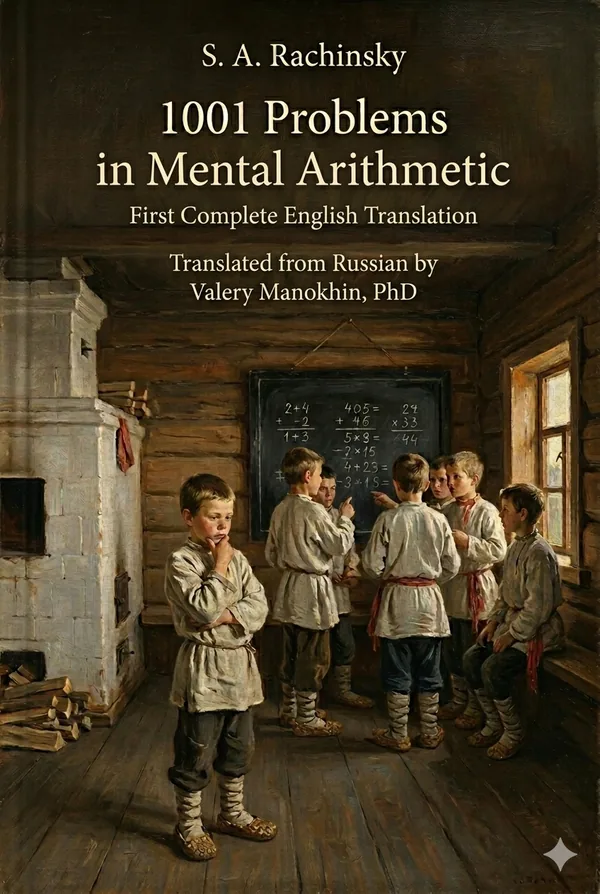
1001 Problemas de Rachinsky
por S. A. Rachinsky
Séries 4–8 (EUA) · Years 5–9 (RU)
1.001 problemas cuidadosamente selecionados do professor rural cujos alunos foram retratados na famosa pintura de 1895 "Aritmética Mental."
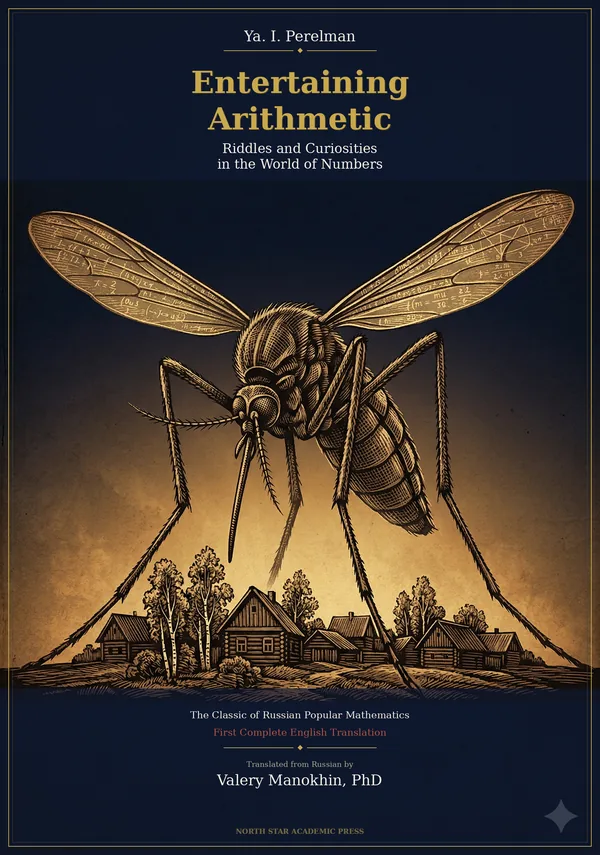
Aritmética Recreativa
por Ya. I. Perelman
Séries 4+ (EUA) · Year 5+ (RU)
O clássico da matemática popular russa. Quebra-cabeças, enigmas e curiosidades que tornam a aritmética verdadeiramente divertida.
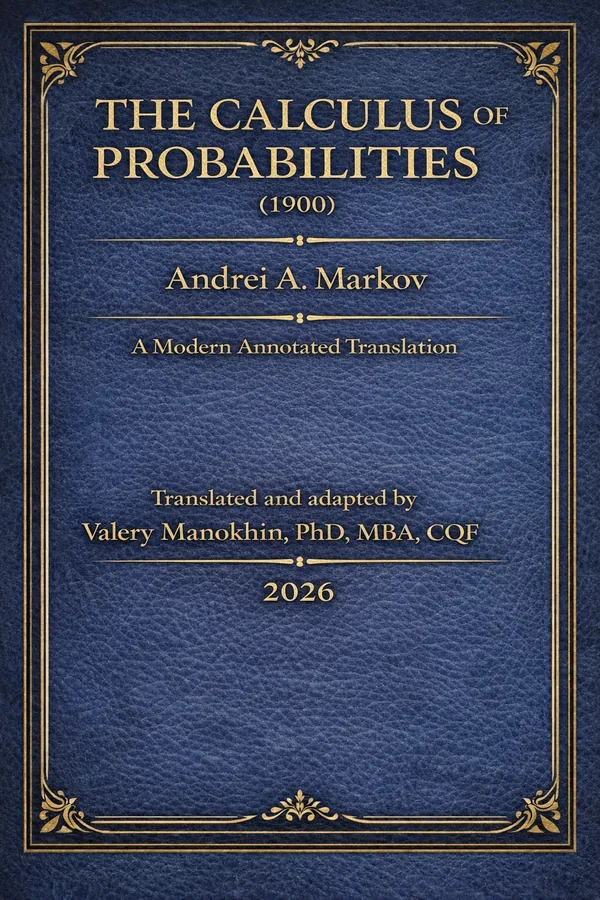
Markov: Probabilidades
por Andrei A. Markov
Séries 12 and university (EUA) · Year 13 and university (RU)
A obra fundacional de 1900 sobre a teoria da probabilidade pelo matemático que nos deu as cadeias de Markov.