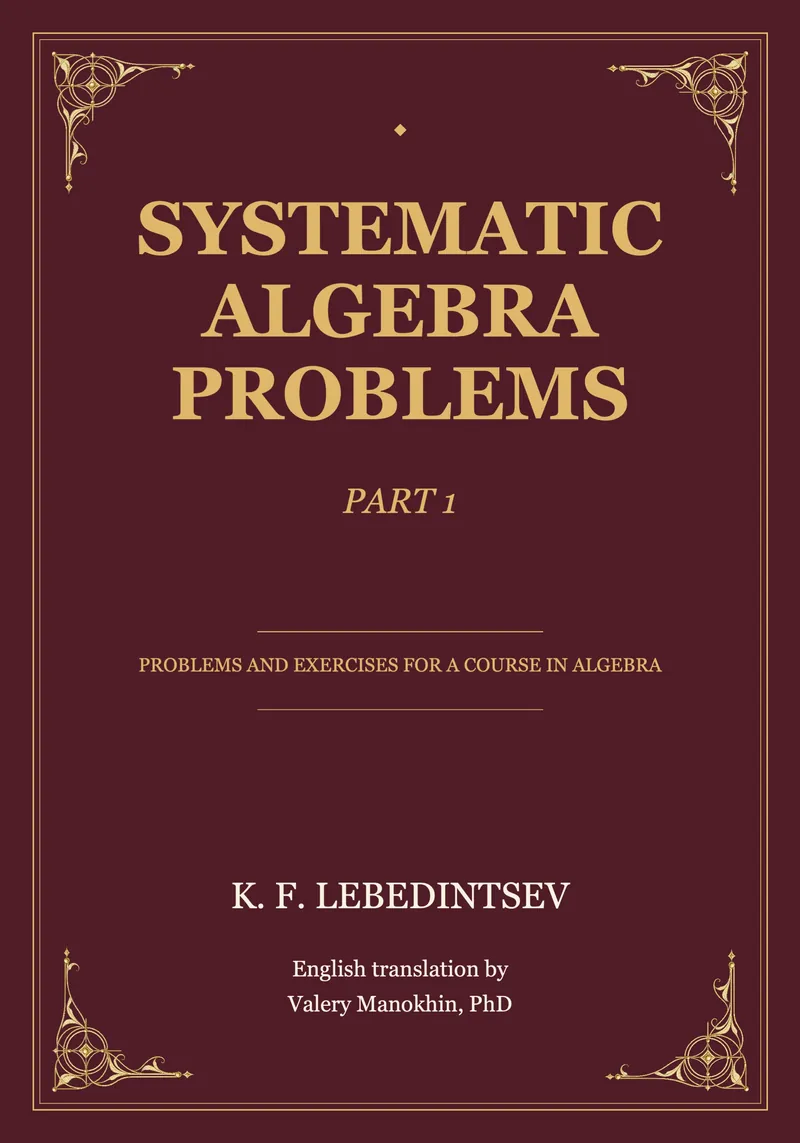
Problemas Sistemáticos de Álgebra de Lebedintsev, Parte I
por K. F. Lebedintsev
Traducido por Valery Manokhin, PhD
Una colección graduada de 1.637 problemas para el primer curso de álgebra, en primera traducción fiel al inglés desde la edición rusa original. Cinco divisiones y sesenta secciones numeradas: de las fórmulas generales construidas a partir de problemas aritméticos, coeficientes, exponentes y raíces, a los números negativos, el cero y las coordenadas sobre una recta; las operaciones con expresiones enteras y fraccionarias, la factorización, el máximo común divisor y el mínimo común múltiplo, y los exponentes cero y negativos; ecuaciones y desigualdades de primer grado, proporciones y sistemas de dos y tres incógnitas, con largas series de problemas de comercio, viajes, trabajo y física; y puntos y rectas en el plano de coordenadas, funciones de primer orden y sus gráficas. No se imprimen respuestas: el autor sostenía que el alumno debe comprobar su propio trabajo.
5 capítulos · 60 artículos numerados · 1637 ejercicios · 140 páginas
Dónde encaja en el curso escolar — EE. UU., Reino Unido y Canadá ↓ Adultos y autodidactas bienvenidos — las grandes matemáticas no tienen límite de edad.
Dónde encaja en el curso escolar
Plan de estudios completo: todos los libros por curso →| Estados Unidos | 7–9 | Problem companion to Pre-Algebra → Algebra 1 (linear graphs included; no quadratics) |
|---|---|---|
| Reino Unido | Years 8–10 | KS3 → GCSE Foundation and Higher |
| Canadá | Ontario 7–9 | Grade 7–8 math → MTH1W · BC Math 8–9 · QC Secondary I–III |
No incluido en este libro
estadística y tratamiento de datos · probabilidad · unidades métricas: algunos problemas usan medidas rusas antiguas (verstas, sazhens, archinas, puds)
Estos bloques habrá que cubrirlos con otro material. Faltan en el libro, no en esta descripción.
Dónde encaja este libro
Ver la secuencia completa →Problemas para trabajar en paralelo
- Álgebra Elemental$69.95
- Álgebra I de Kiselev$44.95
Índice
60 secciones — el índice completo del libro impreso.
Translator's Note
Division I. Introduction7 secciónes
- § 1. Formation of general formulas from particular ones
- § 2. Formation of general formulas from the conditions of problems, with computation of the numerical values of the results obtained
- § 3. Expression of general truths of arithmetic in the form of formulas
- § 4. Formation of problems for given general formulas
- § 5. Coefficient and exponent
- § 6. The concept of a root
- § 7. Representation and reading of algebraic expressions and formulas in connection with the computation of numerical values
Division II. The first four operations on explicit quantities8 secciónes
- § 1. The concept of a negative number and of zero
- § 2. Addition of algebraic numbers
- § 3. Subtraction of algebraic numbers
- § 4. Multiplication of algebraic numbers
- § 5. Division of algebraic numbers
- § 6. Raising algebraic numbers to a power
- § 7. Operations with zero
- § 8. The concept of coordinates determining the position of a point on a line. Its application to the calculation of relative distances and intervals of time
Division III. The first four operations on explicit quantities (not containing roots)25 secciónes
- § 1. Preliminary concepts
- § 2. Addition of monomials
- § 3. Addition of polynomials with monomials and polynomials
- § 4. Subtraction of monomials
- § 5. Subtraction of polynomials
- § 6. Transformation of a polynomial into the sum or difference of two quantities
- § 7. Multiplication of monomials
- § 8. Multiplication of a polynomial by a monomial, and conversely
- § 9. Change of sign of an implicit algebraic quantity
- § 10. Multiplication of a polynomial by a polynomial
- § 11. Division of monomials
- § 12. Division of a polynomial by a monomial
- § 13. Division of a polynomial by a polynomial
- § 14. Special cases of multiplication and division
- § 14a. Exercises on all operations with integral quantities
- § 15. Factoring polynomials
- § 16. The concept of entirely integral, prime, composite, and relatively prime expressions
- § 17. Finding the greatest common divisor and the least common multiple
- § 18. Reduction of the simplest implicit fractions to normal form. Cancellation of fractions
- § 19. Reduction of fractions to a common denominator
- § 20. Addition and subtraction of fractions with each other and with integral quantities
- § 21. Multiplication of fractions with each other and with integral quantities
- § 22. Division of fractions by one another and by integral quantities
- § 23. Reduction of any fraction to normal form. Operations on fractional polynomials
- § 24. Operations on quantities with zero and negative exponents
Division IV. The study of equalities and inequalities of the first degree14 secciónes
- § 1. The concept of explicit and implicit, conditional and unconditional equalities
- § 2. Formation of the simplest equations from the conditions of problems and their solution (by reasoning)
- § 3. The theory of proportions
- § 4. Classification of equations
- § 5. Solution of equations of the first degree in one unknown
- § 6. Application of equations of the first degree with one unknown to the solution of problems
- § 7. Investigation of the meaning of the results obtained in solving equations of the first degree with one unknown
- § 8. Equations of the first degree with two unknowns
- § 9. Solving problems by setting up a system of equations of the first degree with two unknowns
- § 10. Investigation of the meaning of the results obtained in solving a system of two equations of the first degree with two unknowns
- § 11. Equations with three or more unknowns
- § 12. Application of first-degree equations with three unknowns to the solution of problems
- § 13. Application of the fundamental properties of affirmative inequalities
- § 14. Interrogative inequalities of the first degree with one unknown
Division V. Functions of the first order and their graphical representation6 secciónes
- § 1. Construction of points on a plane from their given coordinates
- § 2. Construction of straight lines from their given equations, and formation of equations determining given straight lines
- § 3. Graphical representation of the solution of equations of the first degree with one and two unknowns
- § 4. The concept of constant and variable quantities, of independent variables and functions
- § 5. Investigation of the changes of functions of the first order in one independent variable
- § 6. Application of rectilinear graphs to questions concerning uniform change
Formatos y ediciones
| Formato | Precio | ISBN-13 | Dónde | Comprar |
|---|---|---|---|---|
| Tapa blanda | $49.95 | 978-1-919012-96-4 | IngramSpark · directo | Comprar → |
| Tapa blanda | $49.95 | 978-1-919012-96-4 | Amazon (vía Ingram) | Comprar → |
| Tapa dura | $69.95 | 978-1-80910-052-8 | IngramSpark · directo | Comprar → |
| Tapa dura | $69.95 | 978-1-80910-052-8 | Amazon (vía Ingram) | Comprar → |
Los precios son los de lista del editor. Amazon fija el precio final en cada tienda.
IngramSpark imprime y envía los pedidos directos a EE. UU., Reino Unido y Australia. Bibliotecas, escuelas y librerías pueden pedir los mismos ISBN a través de Ingram: pedidos para bibliotecas →
Detalles del producto
- Editorial
- Northern Star Academic Press
- Idioma
- English
- Traductor
- Valery Manokhin, PhD
- Extensión
- 140 páginas
- Primera publicación
- 2026-10-12
Publicado por Northern Star Academic Press · Primera traducción fiel del original ruso
Más de Esta Serie
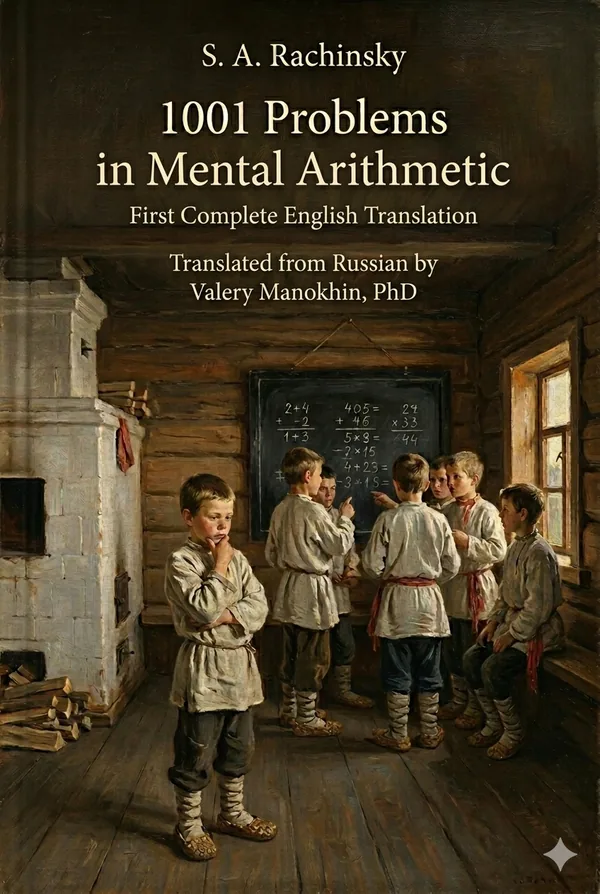
1001 Problemas de Rachinsky
por S. A. Rachinsky
Grados 4–8 (EE. UU.) · Years 5–9 (RU)
1.001 problemas cuidadosamente seleccionados del maestro rural cuyos estudiantes fueron retratados en la famosa pintura de 1895 "Aritmética Mental."
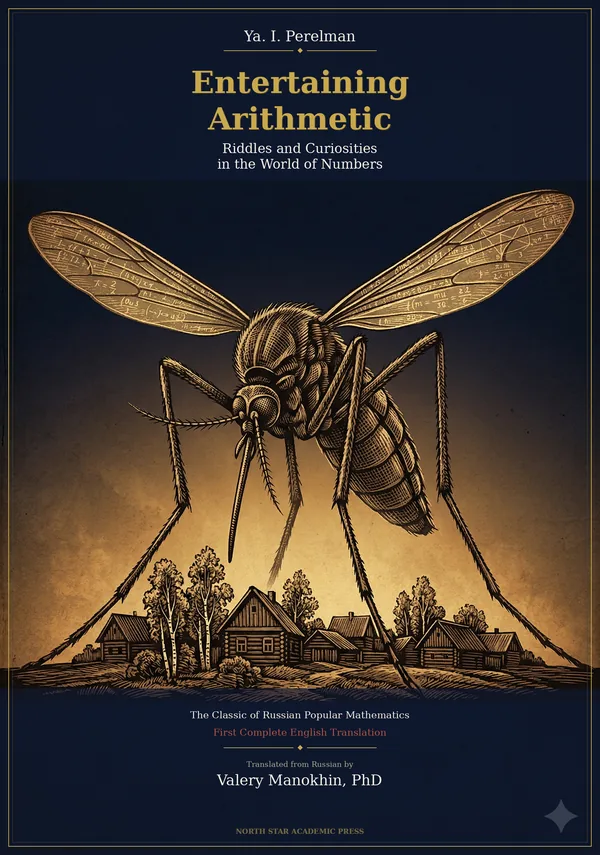
Aritmética Recreativa
por Ya. I. Perelman
Grados 4+ (EE. UU.) · Year 5+ (RU)
El clásico de las matemáticas populares rusas. Rompecabezas, acertijos y curiosidades que hacen la aritmética verdaderamente entretenida.
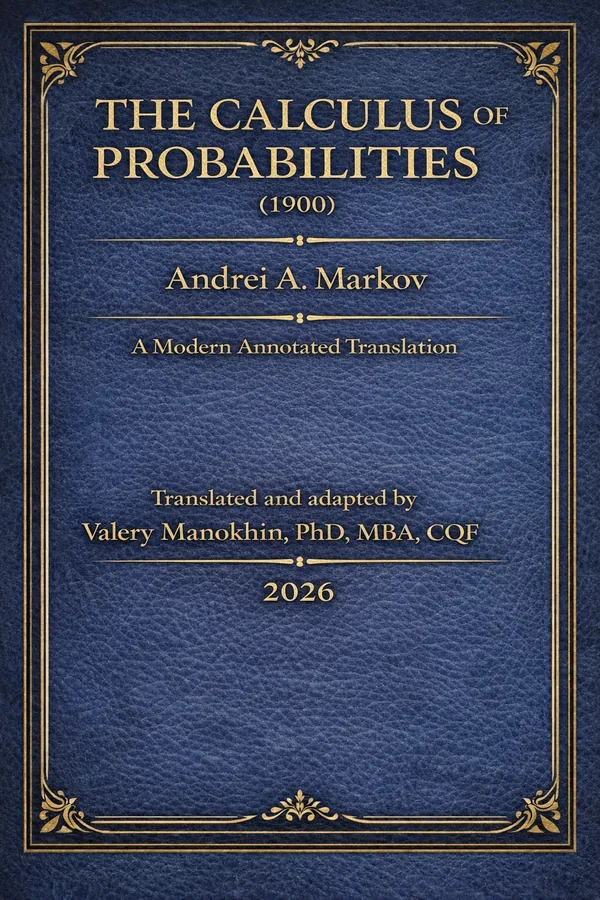
Markov: Probabilidades
por Andrei A. Markov
Grados 12 and university (EE. UU.) · Year 13 and university (RU)
La obra fundacional de 1900 sobre la teoría de la probabilidad por el matemático que nos dio las cadenas de Markov.