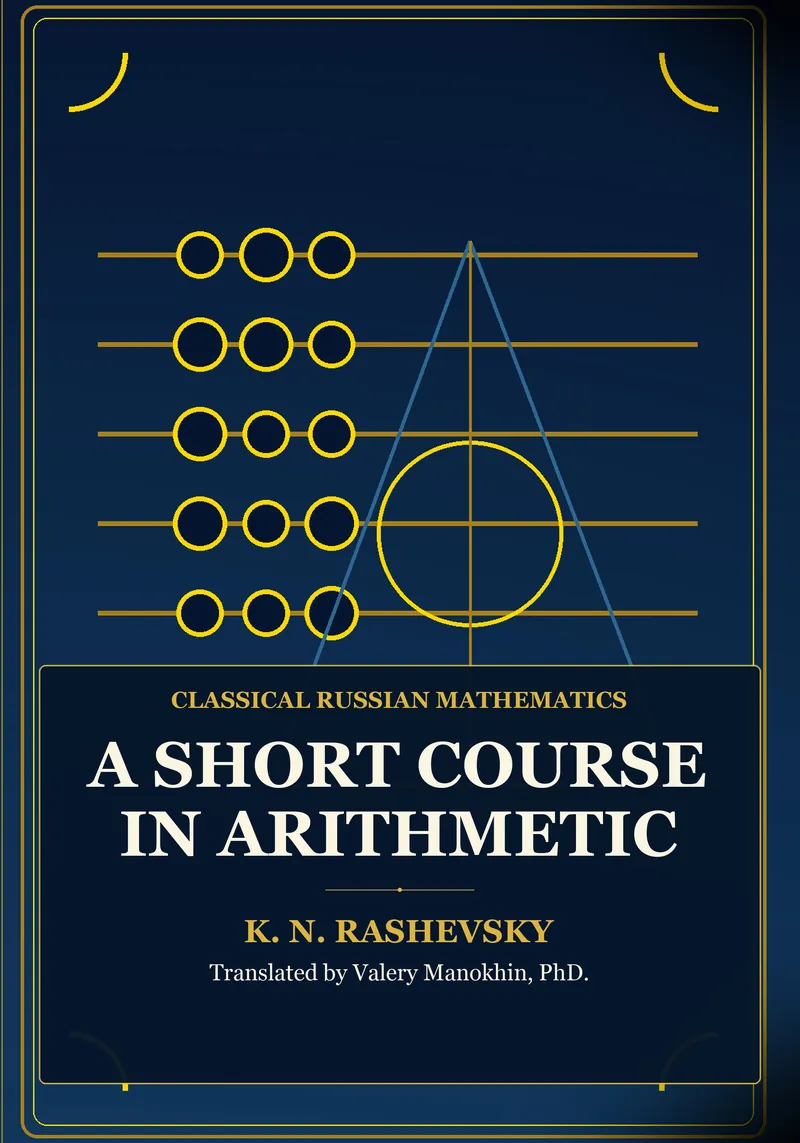
Aritmética de Rashevsky
por K. N. Rashevsky
Traduzido por Valery Manokhin, PhD
Um curso completo de aritmética em nove seções, na primeira tradução fiel para o inglês a partir da edição russa original. As quatro operações com números inteiros e seus métodos escritos por extenso; quantidades denominadas e métricas; áreas e volumes; divisibilidade, primos, máximo divisor comum e mínimo múltiplo comum; frações ordinárias e decimais; razão, proporção e divisão proporcional; porcentagem e problemas de mistura; plantas, diagramas e gráficos.
9 capítulos · 95 páginas
Onde se encaixa na escola — EUA, Reino Unido e Canadá ↓ Adultos e autodidatas são bem-vindos — a grande matemática não tem limite de idade.
Onde se encaixa na escola
Currículo completo: todos os livros por ano escolar →| Estados Unidos | 5–8 | Grade 6–7 math → Pre-Algebra; also a complete adult refresher |
|---|---|---|
| Reino Unido | Years 6–9 | KS2 into KS3 · percentage work reaches GCSE Foundation |
| Canadá | Ontario 5–8 | BC Math 5–8 · QC Elementary 5 – Secondary II |
Não coberto neste livro
números negativos · estatística e tratamento de dados · probabilidade
Estes blocos precisam vir de outro material. Faltam no livro, não nesta descrição.
Onde este livro se encaixa
Ver a sequência completa →Cobre grande parte do mesmo conteúdo
- Aritmética de Kiselev$44.95
O de Kiselev é o curso escolar — seis seções e 214 artigos numerados —, escrito para a criança que encontra a aritmética pela primeira vez. Este são nove seções em 95 páginas, para quem quer a matéria inteira de volta em ordem, e termina com plantas, diagramas e gráficos, que Kiselev não trata.
Há forte sobreposição. Cada nota diz o que aquele livro traz e este não — são essas diferenças que decidem.
Problemas para trabalhar em paralelo
- Aritmética Recreativa$34.95
O que vem depois
- Álgebra de Davidov$59.95
- Álgebra I de Kiselev$44.95
Sumário
166 seções — o sumário completo do livro impresso.
Translator's Preface
I. ELEMENTARY CONCEPTS3 seções
- 1. Definitions
- 2. Numeration table
- 3. Roman numeration
II. ARITHMETICAL OPERATIONS44 seções
- 4. Definitions
- ADDITION
- 5. Definitions
- 6. Property of the sum
- 7. Addition table
- 8. Placement of names
- 9. Uses of addition
- SUBTRACTION
- 10. Definitions
- 11. Uses of subtraction
- 12. Addition and subtraction
- 13. Placement of names
- 14. Examples of subtraction
- MULTIPLICATION
- 15. Definitions
- 16. Main property of the product
- 17. Special cases of multiplication
- 18. Multiplication table
- 19. Rule
- 20. Rule
- 21. Definitions
- 22. Use of multiplication
- 23.
- 24. Placement of names
- DIVISION
- 25. Definitions
- 26. Division with a remainder
- 27. Special cases of division
- 28.
- 29. Uses of division
- 30. Placement of names
- 31.
- CHECKING THE OPERATIONS
- 32.
- ARITHMETICAL EXPRESSIONS AND PARENTHESES
- 33.
- CHANGES IN THE SUM, DIFFERENCE, PRODUCT, AND QUOTIENT
- 34. Change in the sum
- 35. Change in the difference
- 36. Change in the product
- 37. Change in the quotient (division without a remainder)
- PROPERTIES OF THE OPERATIONS
- 38.
- 39. Special cases of the operations
III. NAMED NUMBERS21 seções
- 40. Definitions
- METRIC MEASURES
- 41. Measures of weight
- 42. Measures of length
- 43. Measures of area, or square measures
- 44. Measures of volume, or cubic measures
- 45. Measures of dry goods and liquids
- 46. Measures of paper
- 47. Money
- 48. Measures of time
- 49. The calendar
- 50. Symbols for metric measures
- 51. Converting larger measures into smaller ones
- 52. Converting smaller measures into larger ones
- 53. Addition and subtraction of compound named numbers
- 54. Problems in calculating time
- 55. Multiplication of compound named numbers
- 56. Division of compound named numbers
- DETERMINATION OF AREAS AND VOLUMES
- 57.
- 58.
IV. TESTS FOR DIVISIBILITY2 seções
- 59. Definition
- 60.
V. COMMON FRACTIONS, THEIR TRANSFORMATIONS, AND OPERATIONS ON THEM30 seções
- 61.
- 62. Rule
- 63. Rule
- 64. Comparing fractions
- 65. Rule
- 66. Main property of a fraction
- 67. Reducing fractions
- 68. Expressing fractions in other parts
- 69.
- 70. Remark
- 71. Example 1
- 72. Addition of fractions
- 73. Rule
- 74. Subtraction of fractions
- 75. Multiplication of fractions
- 76. Rule
- 77. Cancellation when multiplying fractions
- 78.
- 79.
- 80.
- 81. Division of fractions
- 82.
- 83. Definition
- 84. General rule of division
- 85.
- FINDING A PART OF A NUMBER AND A NUMBER FROM ITS PART
- 86.
- OPERATIONS WITH FRACTIONAL NAMED NUMBERS
- 87.
- 88. Remark
VI. DECIMAL FRACTIONS27 seções
- 89. Definition
- 90. Reading decimal fractions
- 91. Rule
- 92. Main property of a decimal fraction
- 93. Rule
- 94. Rule
- 95. Comparing decimal fractions
- 96. Rule
- 97. Addition and subtraction of decimal fractions
- 98. Multiplication of decimal fractions
- 99. Division of decimal fractions
- 100. Approximate quotient
- 101. Rule
- APPROXIMATE CALCULATIONS
- 102. Addition
- 103. Abbreviated multiplication
- 104. Abbreviated division
- 105. Converting common fractions to decimals
- 106. Definition
- 107. Theorem
- METRIC SYSTEM OF MEASUREMENT
- 108.
- 109.
- 110. Metric monetary units
- 111. Use of tables
- 112. Tables for converting Russian measures to metric measures
- 113. Advantages of the metric system
VII. DIVISORS AND MULTIPLES8 seções
- 114. Absolutely prime and composite numbers
- 115. Eratosthenes' sieve
- 116. Factoring numbers into prime factors
- 117. Greatest common divisor
- 118. Rule
- 119. Rule
- 120. Relatively prime numbers
- 121. Rule
VIII. PROPORTION. PROBLEMS ON PROPORTIONAL QUANTITIES23 seções
- 122. Ratio and proportion
- 123. Definition
- 124. Fundamental property of a proportion
- 125.
- 126. Definition
- 127. Proportional quantities
- PERCENTAGE CALCULATIONS
- 128. Definition
- 129. Definitions
- 130. Problem 1
- DISCOUNTING BILLS
- 131.
- 132. Problem
- PROPORTIONAL DIVISION
- 133. Problem
- 134. Problem
- 135. Problem
- 136. Problem
- MIXING PROBLEMS
- 137. Definition
- 138. Problem
- 139. Problem
- 140. Problem
IX. DRAWING PLANS, DIAGRAMS, AND GRAPHS8 seções
- 141. Plan
- 142. Diagrams
- 143. Percentage diagrams
- 144. Circular diagram
- GRAPHICAL METHOD FOR SOLVING PROBLEMS
- 145. Function
- 146. Graph
- 147. Problem 1
TABLE OF PRIME NUMBERS
Formatos e edições
| Formato | Preço | ISBN-13 | Onde | Comprar |
|---|---|---|---|---|
| Brochura | $39.95 | 978-1-919012-86-5 | Amazon | Comprar → |
Os preços são os de tabela da editora. A Amazon define o preço final em cada loja.
Detalhes do produto
- Editora
- Northern Star Academic Press
- Idioma
- English
- Tradutor
- Valery Manokhin, PhD
- Extensão
- 95 páginas
- Primeira publicação
- 2026-09-19
Publicado por Northern Star Academic Press · Primeira tradução fiel da edição original russa
Mais Desta Série
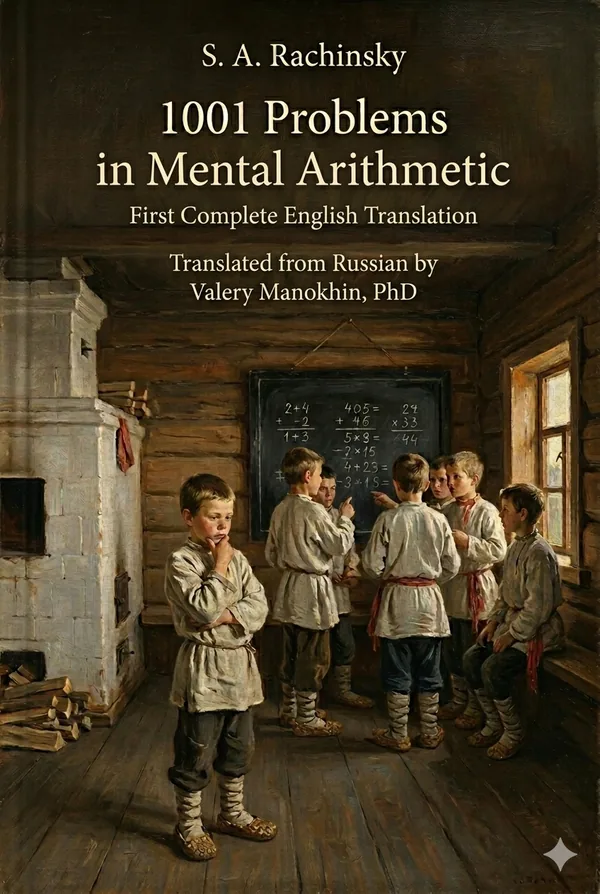
1001 Problemas de Rachinsky
por S. A. Rachinsky
Séries 4–8 (EUA) · Years 5–9 (RU)
1.001 problemas cuidadosamente selecionados do professor rural cujos alunos foram retratados na famosa pintura de 1895 "Aritmética Mental."
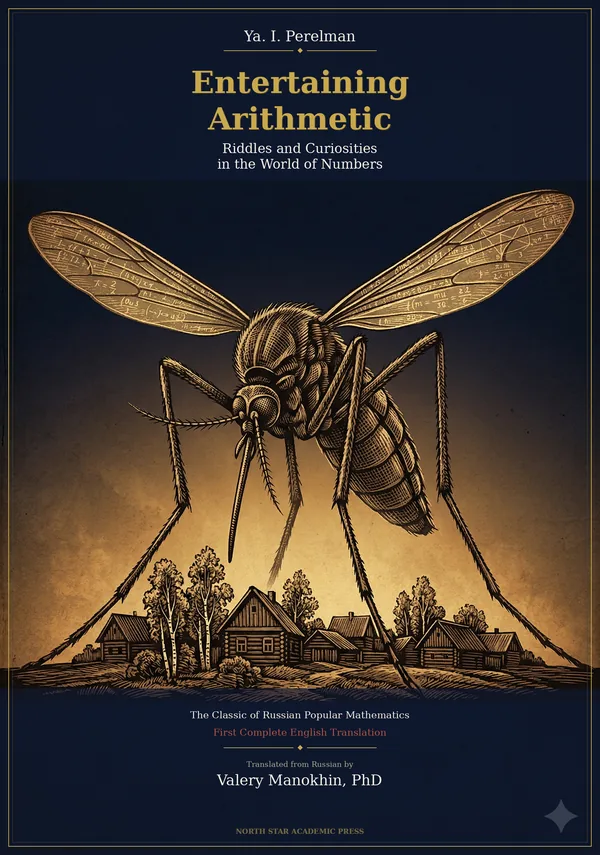
Aritmética Recreativa
por Ya. I. Perelman
Séries 4+ (EUA) · Year 5+ (RU)
O clássico da matemática popular russa. Quebra-cabeças, enigmas e curiosidades que tornam a aritmética verdadeiramente divertida.
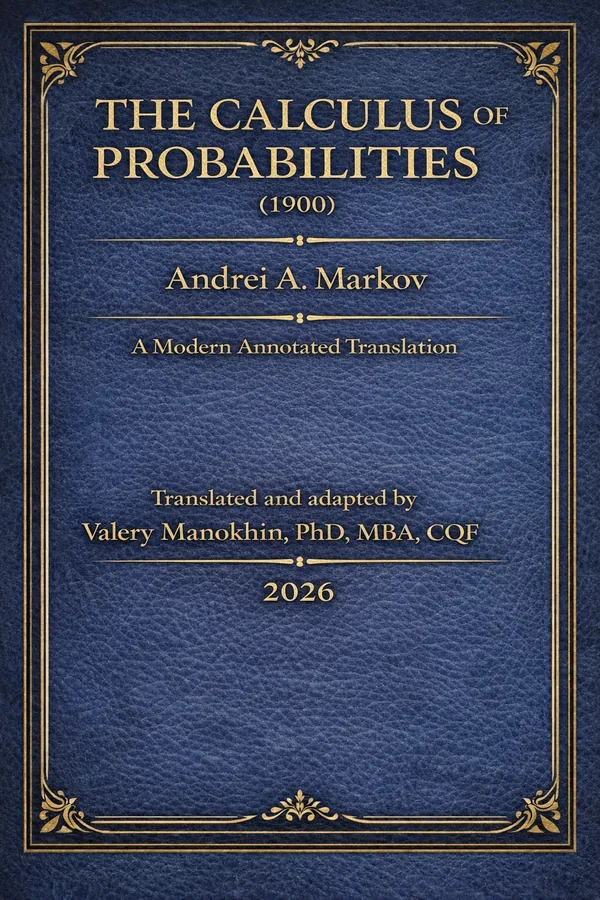
Markov: Probabilidades
por Andrei A. Markov
Séries 12 and university (EUA) · Year 13 and university (RU)
A obra fundacional de 1900 sobre a teoria da probabilidade pelo matemático que nos deu as cadeias de Markov.