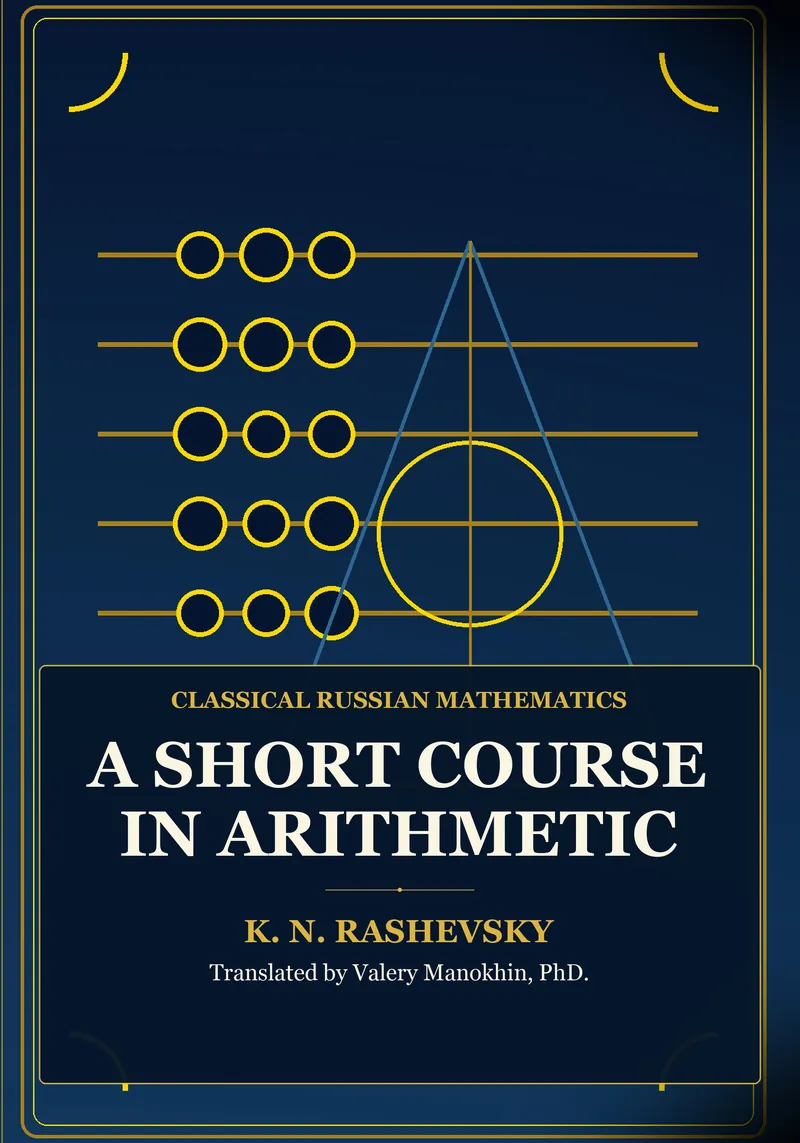
Aritmética de Rashevsky
por K. N. Rashevsky
Traducido por Valery Manokhin, PhD
Un curso completo de aritmética en nueve secciones, en primera traducción fiel al inglés desde la edición rusa original. Las cuatro operaciones con números enteros y sus métodos escritos completos; cantidades denominadas y métricas; áreas y volúmenes; divisibilidad, primos, máximo común divisor y mínimo común múltiplo; fracciones comunes y decimales; razón, proporción y división proporcional; porcentajes y problemas de mezclas; planos, diagramas y gráficas.
9 capítulos · 95 páginas
Dónde encaja en el curso escolar — EE. UU., Reino Unido y Canadá ↓ Adultos y autodidactas bienvenidos — las grandes matemáticas no tienen límite de edad.
Dónde encaja en el curso escolar
Plan de estudios completo: todos los libros por curso →| Estados Unidos | 5–8 | Grade 6–7 math → Pre-Algebra; also a complete adult refresher |
|---|---|---|
| Reino Unido | Years 6–9 | KS2 into KS3 · percentage work reaches GCSE Foundation |
| Canadá | Ontario 5–8 | BC Math 5–8 · QC Elementary 5 – Secondary II |
No incluido en este libro
números negativos · estadística y tratamiento de datos · probabilidad
Estos bloques habrá que cubrirlos con otro material. Faltan en el libro, no en esta descripción.
Dónde encaja este libro
Ver la secuencia completa →Cubre gran parte del mismo temario
- Aritmética de Kiselev$44.95
El de Kiselev es el curso escolar —seis secciones y 214 artículos numerados—, escrito para un niño que se encuentra con la aritmética por primera vez. Este son nueve secciones en 95 páginas, para quien quiere recuperar la materia entera ordenada, y termina con planos, diagramas y gráficas, que Kiselev no trata.
Se solapan en gran medida. Cada nota indica qué trae ese libro que este no — esas diferencias son las que deciden.
Problemas para trabajar en paralelo
- Aritmética Recreativa$34.95
Qué viene después
- Álgebra de Davidov$59.95
- Álgebra I de Kiselev$44.95
Índice
166 secciones — el índice completo del libro impreso.
Translator's Preface
I. ELEMENTARY CONCEPTS3 secciónes
- 1. Definitions
- 2. Numeration table
- 3. Roman numeration
II. ARITHMETICAL OPERATIONS44 secciónes
- 4. Definitions
- ADDITION
- 5. Definitions
- 6. Property of the sum
- 7. Addition table
- 8. Placement of names
- 9. Uses of addition
- SUBTRACTION
- 10. Definitions
- 11. Uses of subtraction
- 12. Addition and subtraction
- 13. Placement of names
- 14. Examples of subtraction
- MULTIPLICATION
- 15. Definitions
- 16. Main property of the product
- 17. Special cases of multiplication
- 18. Multiplication table
- 19. Rule
- 20. Rule
- 21. Definitions
- 22. Use of multiplication
- 23.
- 24. Placement of names
- DIVISION
- 25. Definitions
- 26. Division with a remainder
- 27. Special cases of division
- 28.
- 29. Uses of division
- 30. Placement of names
- 31.
- CHECKING THE OPERATIONS
- 32.
- ARITHMETICAL EXPRESSIONS AND PARENTHESES
- 33.
- CHANGES IN THE SUM, DIFFERENCE, PRODUCT, AND QUOTIENT
- 34. Change in the sum
- 35. Change in the difference
- 36. Change in the product
- 37. Change in the quotient (division without a remainder)
- PROPERTIES OF THE OPERATIONS
- 38.
- 39. Special cases of the operations
III. NAMED NUMBERS21 secciónes
- 40. Definitions
- METRIC MEASURES
- 41. Measures of weight
- 42. Measures of length
- 43. Measures of area, or square measures
- 44. Measures of volume, or cubic measures
- 45. Measures of dry goods and liquids
- 46. Measures of paper
- 47. Money
- 48. Measures of time
- 49. The calendar
- 50. Symbols for metric measures
- 51. Converting larger measures into smaller ones
- 52. Converting smaller measures into larger ones
- 53. Addition and subtraction of compound named numbers
- 54. Problems in calculating time
- 55. Multiplication of compound named numbers
- 56. Division of compound named numbers
- DETERMINATION OF AREAS AND VOLUMES
- 57.
- 58.
IV. TESTS FOR DIVISIBILITY2 secciónes
- 59. Definition
- 60.
V. COMMON FRACTIONS, THEIR TRANSFORMATIONS, AND OPERATIONS ON THEM30 secciónes
- 61.
- 62. Rule
- 63. Rule
- 64. Comparing fractions
- 65. Rule
- 66. Main property of a fraction
- 67. Reducing fractions
- 68. Expressing fractions in other parts
- 69.
- 70. Remark
- 71. Example 1
- 72. Addition of fractions
- 73. Rule
- 74. Subtraction of fractions
- 75. Multiplication of fractions
- 76. Rule
- 77. Cancellation when multiplying fractions
- 78.
- 79.
- 80.
- 81. Division of fractions
- 82.
- 83. Definition
- 84. General rule of division
- 85.
- FINDING A PART OF A NUMBER AND A NUMBER FROM ITS PART
- 86.
- OPERATIONS WITH FRACTIONAL NAMED NUMBERS
- 87.
- 88. Remark
VI. DECIMAL FRACTIONS27 secciónes
- 89. Definition
- 90. Reading decimal fractions
- 91. Rule
- 92. Main property of a decimal fraction
- 93. Rule
- 94. Rule
- 95. Comparing decimal fractions
- 96. Rule
- 97. Addition and subtraction of decimal fractions
- 98. Multiplication of decimal fractions
- 99. Division of decimal fractions
- 100. Approximate quotient
- 101. Rule
- APPROXIMATE CALCULATIONS
- 102. Addition
- 103. Abbreviated multiplication
- 104. Abbreviated division
- 105. Converting common fractions to decimals
- 106. Definition
- 107. Theorem
- METRIC SYSTEM OF MEASUREMENT
- 108.
- 109.
- 110. Metric monetary units
- 111. Use of tables
- 112. Tables for converting Russian measures to metric measures
- 113. Advantages of the metric system
VII. DIVISORS AND MULTIPLES8 secciónes
- 114. Absolutely prime and composite numbers
- 115. Eratosthenes' sieve
- 116. Factoring numbers into prime factors
- 117. Greatest common divisor
- 118. Rule
- 119. Rule
- 120. Relatively prime numbers
- 121. Rule
VIII. PROPORTION. PROBLEMS ON PROPORTIONAL QUANTITIES23 secciónes
- 122. Ratio and proportion
- 123. Definition
- 124. Fundamental property of a proportion
- 125.
- 126. Definition
- 127. Proportional quantities
- PERCENTAGE CALCULATIONS
- 128. Definition
- 129. Definitions
- 130. Problem 1
- DISCOUNTING BILLS
- 131.
- 132. Problem
- PROPORTIONAL DIVISION
- 133. Problem
- 134. Problem
- 135. Problem
- 136. Problem
- MIXING PROBLEMS
- 137. Definition
- 138. Problem
- 139. Problem
- 140. Problem
IX. DRAWING PLANS, DIAGRAMS, AND GRAPHS8 secciónes
- 141. Plan
- 142. Diagrams
- 143. Percentage diagrams
- 144. Circular diagram
- GRAPHICAL METHOD FOR SOLVING PROBLEMS
- 145. Function
- 146. Graph
- 147. Problem 1
TABLE OF PRIME NUMBERS
Formatos y ediciones
| Formato | Precio | ISBN-13 | Dónde | Comprar |
|---|---|---|---|---|
| Tapa blanda | $39.95 | 978-1-919012-86-5 | Amazon | Comprar → |
Los precios son los de lista del editor. Amazon fija el precio final en cada tienda.
Detalles del producto
- Editorial
- Northern Star Academic Press
- Idioma
- English
- Traductor
- Valery Manokhin, PhD
- Extensión
- 95 páginas
- Primera publicación
- 2026-09-19
Publicado por Northern Star Academic Press · Primera traducción fiel del original ruso
Más de Esta Serie
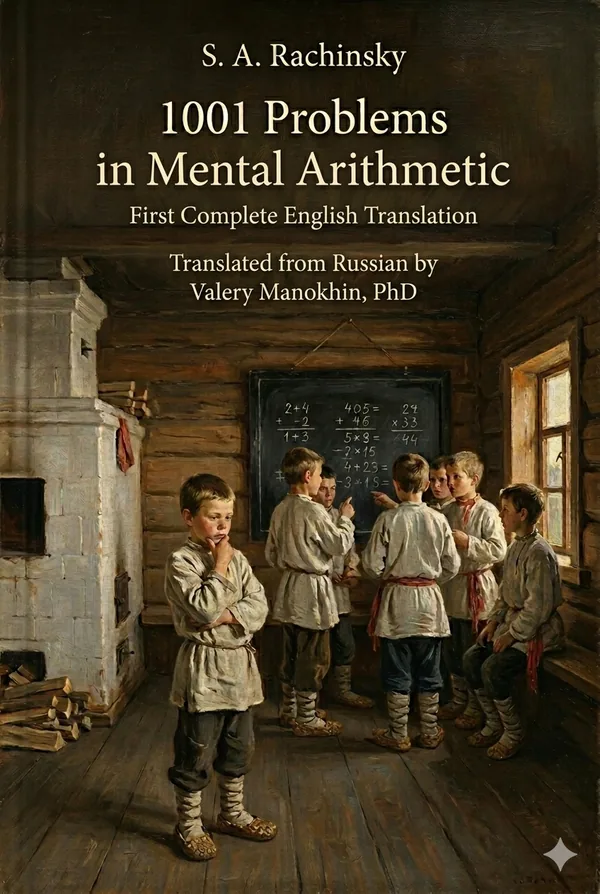
1001 Problemas de Rachinsky
por S. A. Rachinsky
Grados 4–8 (EE. UU.) · Years 5–9 (RU)
1.001 problemas cuidadosamente seleccionados del maestro rural cuyos estudiantes fueron retratados en la famosa pintura de 1895 "Aritmética Mental."
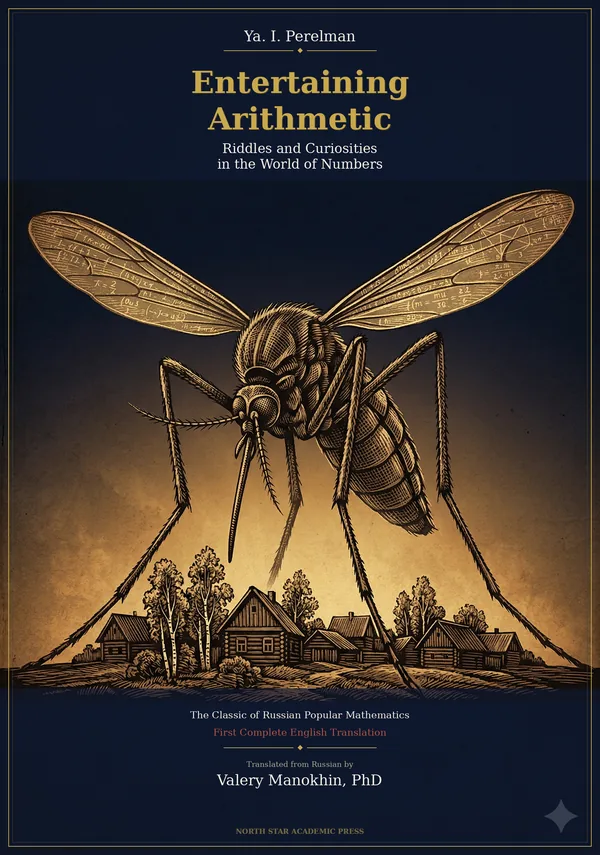
Aritmética Recreativa
por Ya. I. Perelman
Grados 4+ (EE. UU.) · Year 5+ (RU)
El clásico de las matemáticas populares rusas. Rompecabezas, acertijos y curiosidades que hacen la aritmética verdaderamente entretenida.
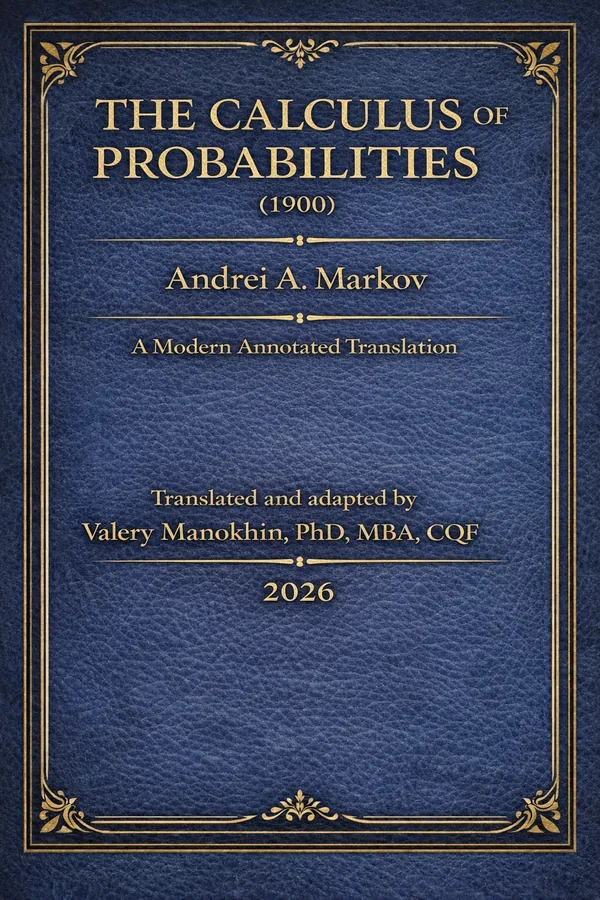
Markov: Probabilidades
por Andrei A. Markov
Grados 12 and university (EE. UU.) · Year 13 and university (RU)
La obra fundacional de 1900 sobre la teoría de la probabilidad por el matemático que nos dio las cadenas de Markov.