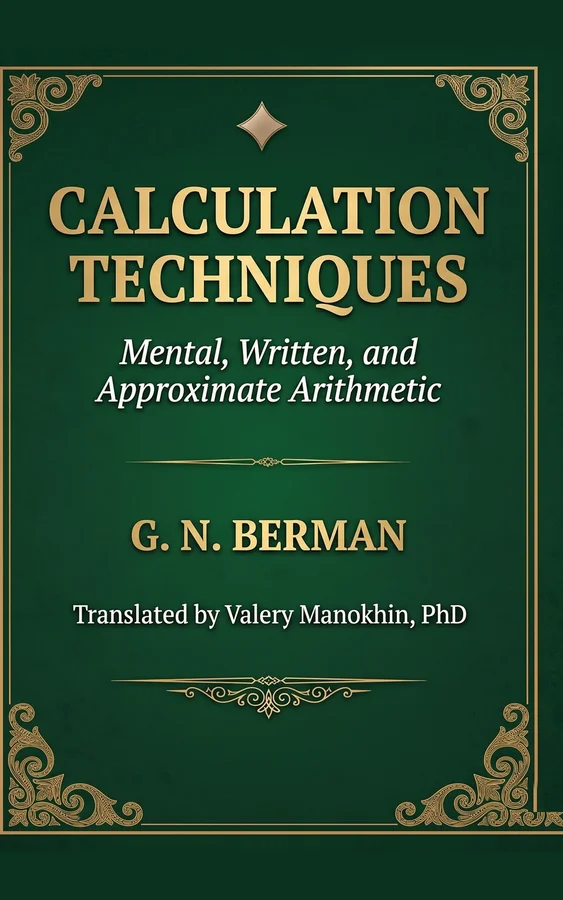
Berman's Calculation Techniques: Mental, Written, and Approximate Arithmetic
by G. N. Berman
Translated by Valery Manokhin, PhD
Three parts covering mental calculation, written calculation, and approximate calculation — the practical arithmetic skills the Russian school tradition treated as foundational. A short, dense book on how to compute well without a calculator.
· 79 pages
Where this fits in school — US, UK and Canada ↓ Adults and self-learners welcome — great mathematics has no age limit.
Where this fits in school
Full curriculum table — every book by school year →| United States | 6–10 | Grade 6–8 math → Algebra 1 → Algebra 2 (the error work is HS N-Q) |
|---|---|---|
| United Kingdom | Years 7–11 | KS3 → GCSE; significant figures and error bounds are Higher |
| Canada | Ontario 7–10 | MTH1W · MPM2D · BC Math 7–10 |
Not covered in this book
statistics and data handling · probability · coordinate geometry
Source these strands elsewhere. They are missing from the book, not from this description.
How this book fits
See the whole sequence →Problems to work alongside it
- Kiselev's Arithmetic$44.95
Table of contents
36 section headings — the printed contents page in full.
About This Book
Table of contents1 section
- Abstract
From the Preface to the Second Edition
Mental Calculation10 sections
- General Remarks
- Addition
- Subtraction
- Simplest Cases of Multiplication and Division
- Multiplication and Division by 5, 25, 50; Multiplication by 1 1/2 and by 15
- Multiplication by 9, 11, 99, 101
- Multiplication by 3, 6, and 7
- Multiplication of Multi-Digit Numbers
- A Few Words about Mental Division
- Percentages
Written Calculations9 sections
- On the Notation of Numbers
- Powers of Ten
- Addition and Subtraction
- Multiplication and Division by Ten and Powers of Ten; Negative Powers of Ten
- Multiplication and Division by a Single-Digit Number
- Multiplication of Multi-Digit Numbers
- Division of Multi-Digit Numbers
- Calculations with Common and Decimal Fractions
- Percentage Calculations
Approximate Calculations16 sections
- Exact and Approximate Values of Quantities
- Absolute and Percentage Error
- Some Features of Writing Approximate Numbers; Number of Correct Decimal Places
- Number of Correct Digits and Its Relation to Percentage Error
- Operations on Approximate Numbers; Rounding
- Addition and Subtraction of Approximate Numbers
- Multiplication of Approximate Numbers
- Mental Multiplication of Approximate Numbers Containing Three Correct Digits
- Division of Approximate Numbers
- How to Place the Decimal Point in Approximate Multiplication and Division
- On Approximate Extraction of Square Roots
- Extracting Roots from Numbers with Three Correct Digits
- Extracting Roots with Any Number of Digits
- Calculations Using Formulas
- Some Formulas for Approximate Calculations
- Conclusion
Formats and editions
| Format | Price | ISBN-13 | Where | Buy |
|---|---|---|---|---|
| $29.95 | — | Gumroad · Instant download | Buy → | |
| Paperback | $29.95 | 978-1-919012-46-9 | Amazon | Buy → |
| Hardcover | $44.95 | 978-1-919012-47-6 | Amazon | Buy → |
Prices are the publisher list prices. Amazon sets the final price in each store.
Product details
- Publisher
- Northern Star Academic Press
- Language
- English
- Translator
- Valery Manokhin, PhD
- Print length
- 79 pages
- First published
- 2026-08-15
Published by Northern Star Academic Press · First faithful English translation from the original Russian edition
More in This Series
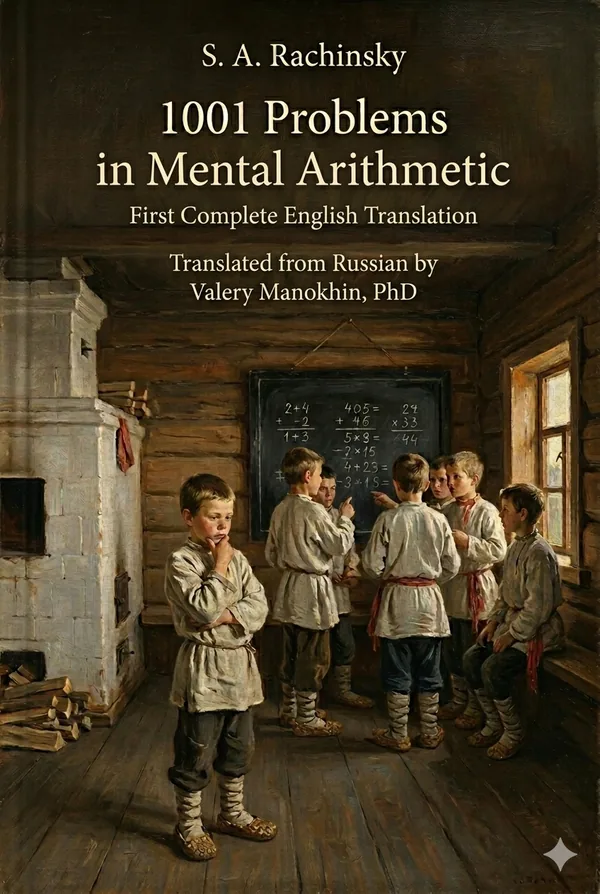
Rachinsky's 1001 Problems
by S. A. Rachinsky
US grades 4–8 · UK Years 5–9
1,001 carefully selected problems from the village schoolteacher whose students were depicted in Bogdanov-Belsky's famous 1895 painting "Mental Arithmetic."
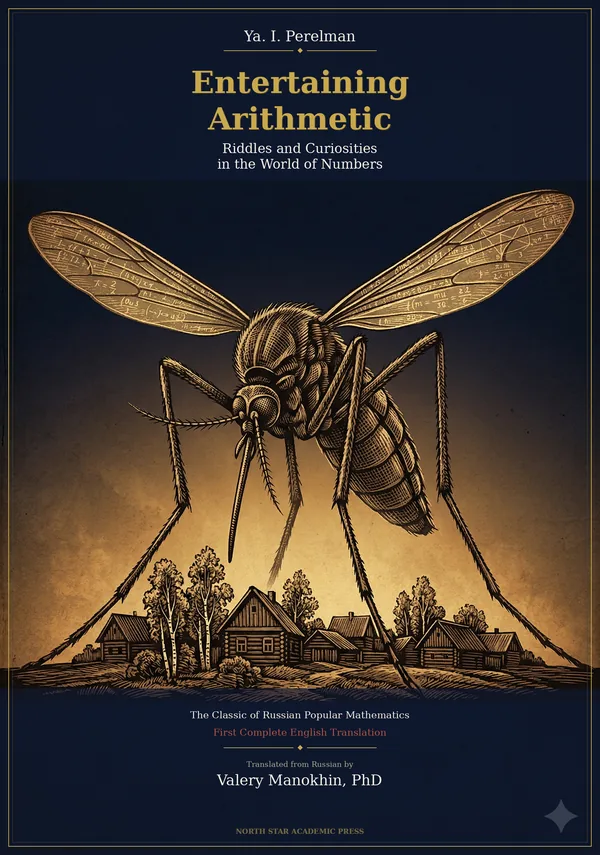
Perelman's Entertaining Arithmetic
by Ya. I. Perelman
US grades 4+ · UK Year 5+
The classic of Russian popular mathematics. Puzzles, riddles, and curiosities that make arithmetic genuinely entertaining.
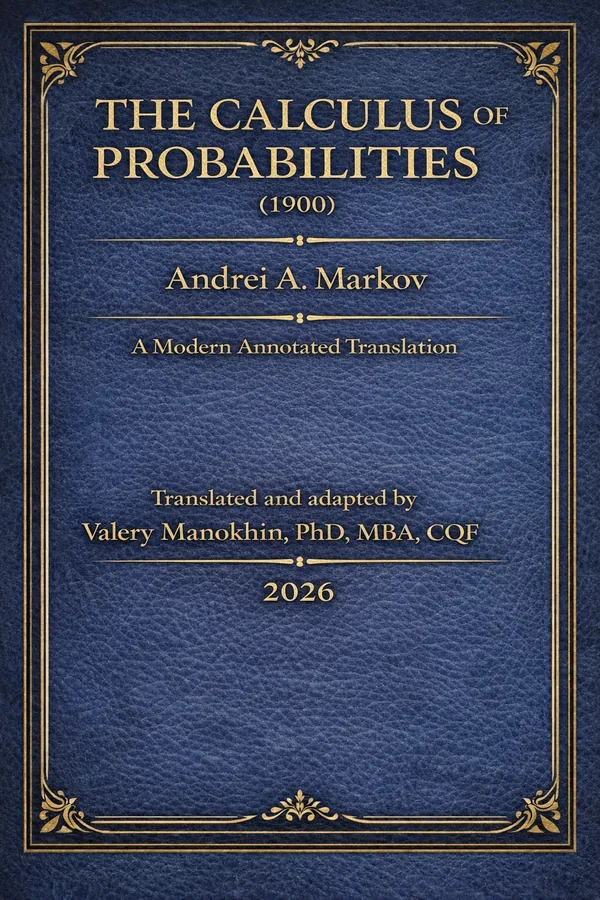
Markov: Probabilities
by Andrei A. Markov
US grades 12 and university · UK Year 13 and university
The foundational 1900 work on probability theory by the mathematician who gave us Markov chains. A modern annotated English translation.